Private CT Scan
- No waiting times
- Hospital in Newton-le-Willows
- No NHS referral
- Spread the cost
What is a private CT scan?
A CT (computed tomography) scan uses a series of X-rays taken from different angles to build a detailed, cross-sectional image of the inside of your body - far more comprehensive than a standard X-ray alone. It's quick, painless and non-invasive, and can be used both to diagnose a specific problem and as a preventative health check, for example screening for early signs of heart disease or bowel cancer.
At Pall Mall, you can book a private CT scan without a GP referral, with appointments usually available within two to three days - often the same day. Whether you're investigating a recent injury, ongoing symptoms, or simply want peace of mind, our team will guide you through the process and get you clear answers, fast.
When are CT scans used?
CT scans are incredibly versatile and can be used for a variety of purposes, including:
Diagnosing a range of conditions: Identifying damage to internal organs and bones, blood flow problems like blood clots and strokes, and diagnosing cancer.
Guiding further tests and treatments: Assisting with procedures such as needle biopsies or monitoring tumours throughout treatment.
Planning and guiding surgeries: Helping medical professionals prepare for surgeries or serve as a navigational tool during procedures.
Imaging the muscular and nervous systems: Providing high-quality images to assess injuries or ongoing concerns, such as brain scans or broken bones.
Supporting cancer treatment: Determining the shape, size, and location of cancers before radiotherapy.
Thanks to the expert reporting provided by CT Scans, our images can help you diagnose, confirm or investigate a problem further - which can all be presented to your consultant.
We have a very simple one-page referral template (available here) which you can download and return to us via email (gp@pallmallmedical.co.uk). Alternatively, you can send us your own imaging referral form or a clinic letter. Once we have all the referral information, we will contact the patient to book their scan. When the results are available, we will send you a copy of the report and we can also send you images of the scan.
Is a CT scan painful?
If you, or a family member, are set to undergo a CT Scan, it's completely understandable that you'd feel a little nervous ahead of the procedure. Our friendly and dedicated team on hand from the moment you arrive at the Pall Mall private hospital in Newton-le-Willows (close to St Helens, between Manchester and Liverpool) to the second you leave with your results.
Rest assured, the CT scan will not cause you any pain. This is because a CT scan is a non-invasive procedure that is relatively short compared to other scanning methods.
The scan will be finished in just a few minutes and you can go back to your daily activities in as little as an hour - safe in the knowledge a private GP will call you to go through your results and answer any questions you have.
If you're still nervous, we can administer a special medicine to help you relax (a sedative) - which is administered through an IV in a similar fashion to contrast material.
As always, if you're feeling sick, woozy, or overly anxious, make sure to tell a member of the team so we can help - or stop the test, if needed.
How to book a CT scan?
You can book a CT scan at Pall Mall without a referral from your doctor. It’s possible to book a same day appointment and the longest wait for an appointment is two or three days. We understand that you may feel a little nervous the first time you have a CT scan, but rest assured it’s a completely safe and painless procedure.
I have a referral form or letter: If you already have an imaging referral form or letter, we can book your scan appointment as soon as your referral has been reviewed by one of our experienced radiographers.
I don't have a referral form or letter: We offer CT scans on a self-referral basis too, meaning you don’t need to get a referral from your NHS GP. We offer a free of charge consultation with our own private GP who will obtain the clinical details the radiographer requires before performing the scan. Once this referral has been created and vetted by one of our experienced radiographers we can book you in for your scan right away.
I am the referring GP, Consultant or Physician: We have a very simple one-page referral template (available here) which you can download and return to us via email (gp@pallmallmedical.co.uk). Alternatively, you can send us your own imaging referral form or a clinic letter. Once we have all the referral information, we will contact the patient to book their scan. When the results are available, we will send you a copy of the report and we can also send you images of the scan.






How much does a Private CT scan cost?
| Area | Price From |
| 1 x Area | £430 |
| 2 x Area | £550 |
| 3 x Area | £670 |
| CT Calcium Heart Score | £495 |
| CT Virtual Colonoscopy | £745 |
Common issues that may require a CT Scan
Whether you've been feeling under the weather or want to monitor a pre-existing condition, a private CT Scan with Pall Mall can give you clear and concise answers - without the long wait.
In this section, we'll look at some of the most common procedures our CT Scan is capable of, giving you a little more insight into how our private service could benefit you and your family.
Examining Blood Vessels
CT angiography lets a radiologist trace the blood vessels in detail, spotting blockages, narrowing, or aneurysms without the need for a surgical biopsy or exploratory procedure. It's often used to investigate suspected blood clots, poor circulation in the legs, or as a follow-up after a stroke or mini-stroke, giving your doctor a clear picture of vessel health before deciding on treatment.
Diagnosing Abdominal Issues
Abdominal CT scans may utilise barium as a contrast dye to create detailed images of organs such as the liver, kidneys, gallbladder, spleen, ovaries and the uterus.
Some of the most common reasons you might seek a CT Scan include the following symptoms:
A mass in your abdomen
Abdominal pain
Unexplained weight loss
Possible obstructions in the small or large intestine
Possible inflammation in the intestines
Kidney stones
Examining Small Bones
Small bones in the hands, feet, wrists and ankles are notoriously hard to assess on a standard X-ray, especially with hairline fractures or complex joints made up of several overlapping bones. A CT scan gives a much clearer 3D view, which is particularly useful before surgical repair, or if an X-ray came back inconclusive but pain or swelling persists.
Investigating Tumours
If surgery is being considered to remove a tumour, a CT scan gives the surgical team a clear view of its size, location, and how far it may have spread into surrounding tissue — helping them plan a more precise, effective procedure.
Guiding Cancer Treatment
CT scans play an ongoing role throughout cancer treatment: helping position radiotherapy accurately, tracking how a tumour responds to chemotherapy, and giving multiple specialists a shared, reliable reference point as treatment progresses.
Examining Head and Brain Injuries or Issues
A CT scan of the head gives clear images of the brain and skull, helping identify traumatic injuries, persistent headaches or dizziness, bleeding, stroke, and brain tumours. It can also assist with facial trauma assessment, planning surgical reconstruction, detecting sinus inflammation, and guiding a needle during a brain biopsy.
Diagnosing Spinal Issues and Chronic Pain
A CT scan of the spine may be recommended for chronic back pain or a suspected spinal injury - including analysing fractures, diagnosing pain caused by herniated discs, assessing fracture risk from low bone density, and evaluating scoliosis or other structural abnormalities. For some patients, particularly those with spinal canal narrowing or arthritis, a CT scan is used alongside an MRI for a fuller picture.
Investigating Recent Injuries or Accidents
Following a fall, a car accident, or any incident with a risk of internal injury, a CT scan is often the fastest and most informative way to check for damage that wouldn't show up on an X-ray - such as internal bleeding or organ damage. Because it takes only minutes, it's frequently the first imaging step in emergency assessment.
Obtaining Images When MRI Is Not an Option
A CT scan is often the better option when an MRI isn't practical — for example, if you can't remain still for the 30–60 minutes an MRI can take, or if you experience claustrophobia in enclosed spaces. CT also provides clearer detail on bone and soft tissue together, which can be useful for injuries involving both.
What to expect
Before your scan
There's no special preparation needed. Arrive a little ahead of your appointment time and our team will take you through. Wear loose, comfortable clothing - you may be asked to change into a gown depending on the area being scanned.
Contrast Material
Some scans use a contrast dye to make certain areas - blood vessels, organs, the digestive tract — show up more clearly. It's usually given by IV, though occasionally orally or rectally depending on what's being imaged. It can cause a brief warm flush or metallic taste; this is normal and passes quickly.
During the scan
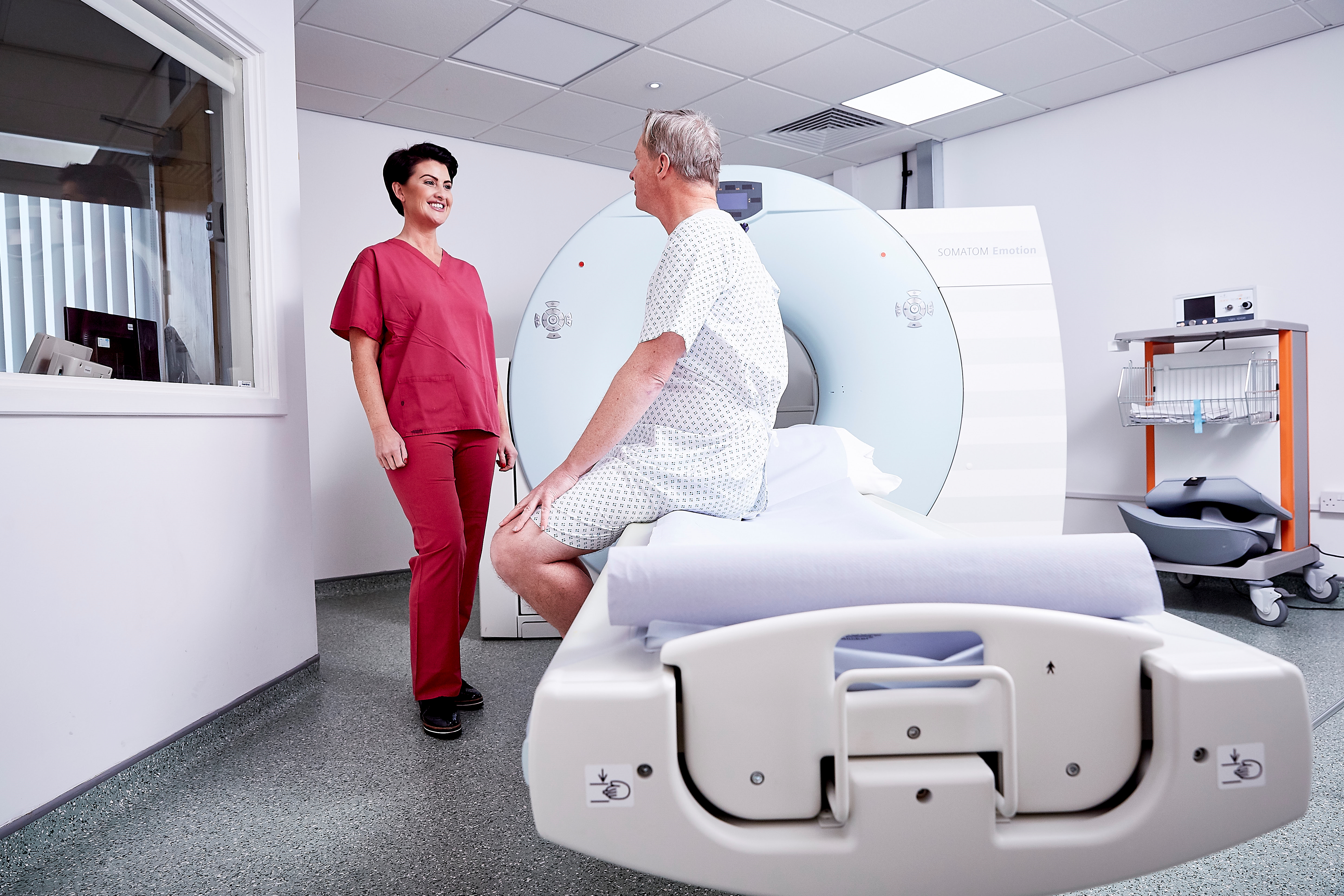
You'll lie on the bed as it moves in small increments through the scanner. The radiographer operates it from the next room and talks you through each step via intercom - you may be asked to hold your breath briefly for clearer images. Most scans are done in 10–20 minutes.
After the scan
You can usually get up and get dressed straight away. If you had contrast, we'll ask you to stay for 30–60 minutes so we can check you haven't had a reaction. After that, you're free to drive, work, or carry on with your day as normal. Your results are reviewed by a radiologist, and we'll be in touch if anything needs a follow-up consultation.

Why choose Pall Mall Medical for CT scans?
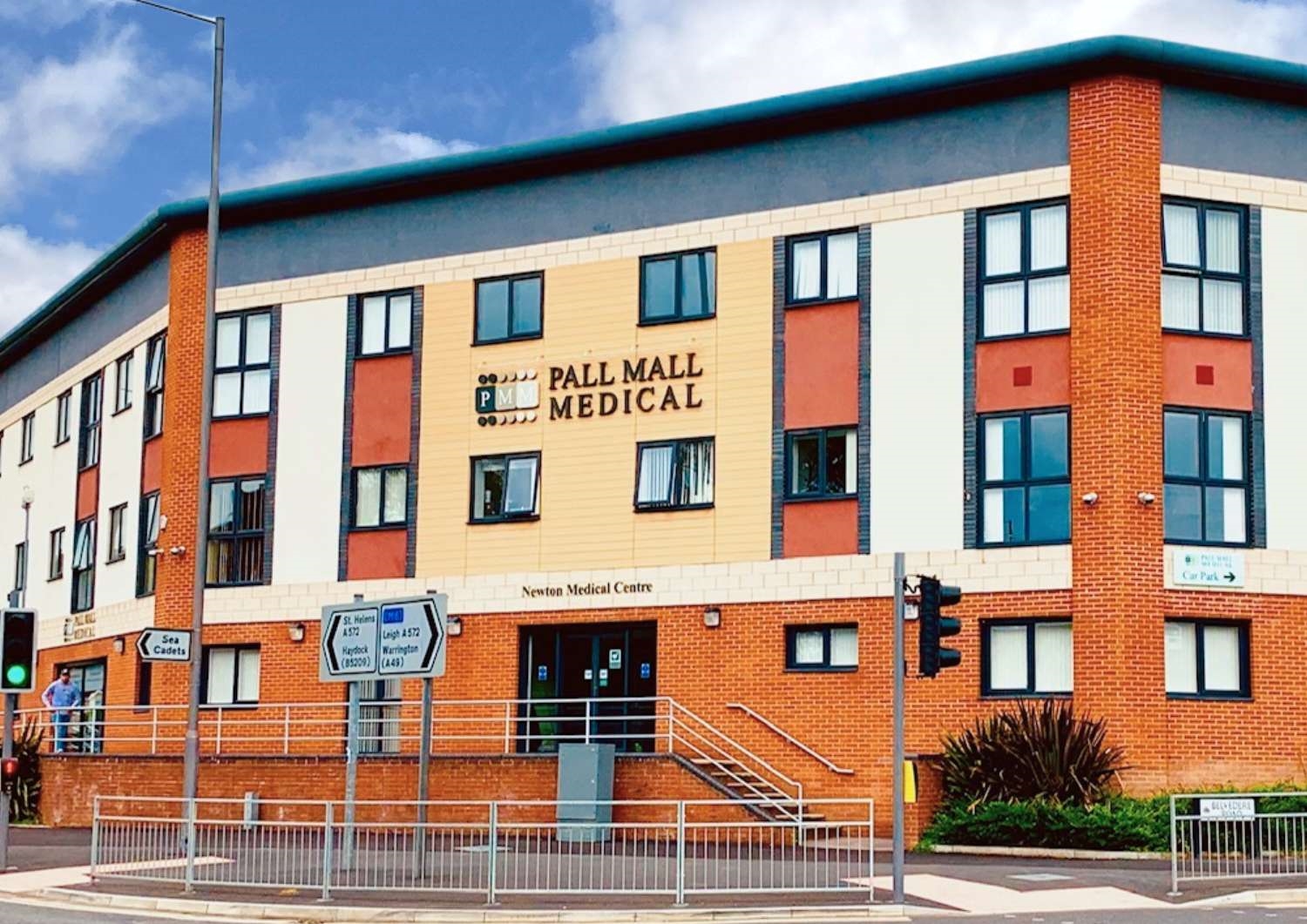
Being a patient with us gives you unrivalled access to our own private hospital, based in Newton-le-Willows, so you can get the treatment you need with no fuss, no waiting, and no complications. Our hospital offers comprehensive care and high-end technology for you.
- Appointments available around you
- Fast access - no NHS waits
- Expert led diagnostics
- No referrals required
- Pay in 3 with Klarna
FAQs
Are CT scans safe?
A CT Scan is a very safe procedure, with only a small amount of X-ray radiation exposure. The diagnostic benefits often far outweigh this minimal risk.
It’s also one of the simplest and most straightforward ways to identify the cause of a medical issue, though we understand it might feel a bit intimidating.
To put it into perspective, the average radiation dose from a CT Scan is roughly equivalent to what you’d naturally be exposed to over about three years in everyday environments.
When is a CT scan not suitable?
A CT Scan might not be the most suitable procedure for everyone. For example, the scanner can interact with metals so anyone who has had surgery that included metal implants will not be able to have a CT Scan.
Before your scan, it's crucial that you notify the radiographer if you have had previous surgery that placed metals inside your body.
Health conditions
Before undergoing a private CT Scan, make sure you talk to your doctor about all your health conditions before the test.
We'll ask you some general questions, before giving you the opportunity to tell us if you:
Are allergic to any medicines.
Have diabetes.
Take metformin.
Are breastfeeding.
If you get nervous or panicked in confined spaces, we can help. Just let us know, as we may be able to prescribe you some medicine to help you relax throughout the procedure.
Pregnancy
If you are pregnant or think that you may be expecting, then you should let us know as soon as possible.
CT Scans aren't usually recommended for pregnant people unless it's an emergency or in very serious circumstances.
This is due to the potential risk that the X-rays and very mild exposure to radiation could harm the baby.
However, that doesn't mean that there are no further options. If you're pregnant, an ultrasound might be recommended over a CT Scan - so you can still receive care and medical imaging in line with your needs.
Piercings
You will also be asked to remove any metal jewellery or piercings before entering the scanner, as these will be visible on the test results.
If you’re unable to remove your piercings, consider wearing a retainer - such as a lightweight ‘Bioflex’ retainer - and let us know in advance so we can determine whether your scan can go ahead as planned.
How does a CT scan work?
CT scans employ the same type of radiation used for X-rays but provide a more accurate three-dimensional image.
Unlike conventional X-rays, which take two-dimensional images to show structures inside the body such as bones, CT scans offer a clear view of inner organs, blood vessels, and soft tissues. These appear as cross-sectional images, which are produced during the scan.
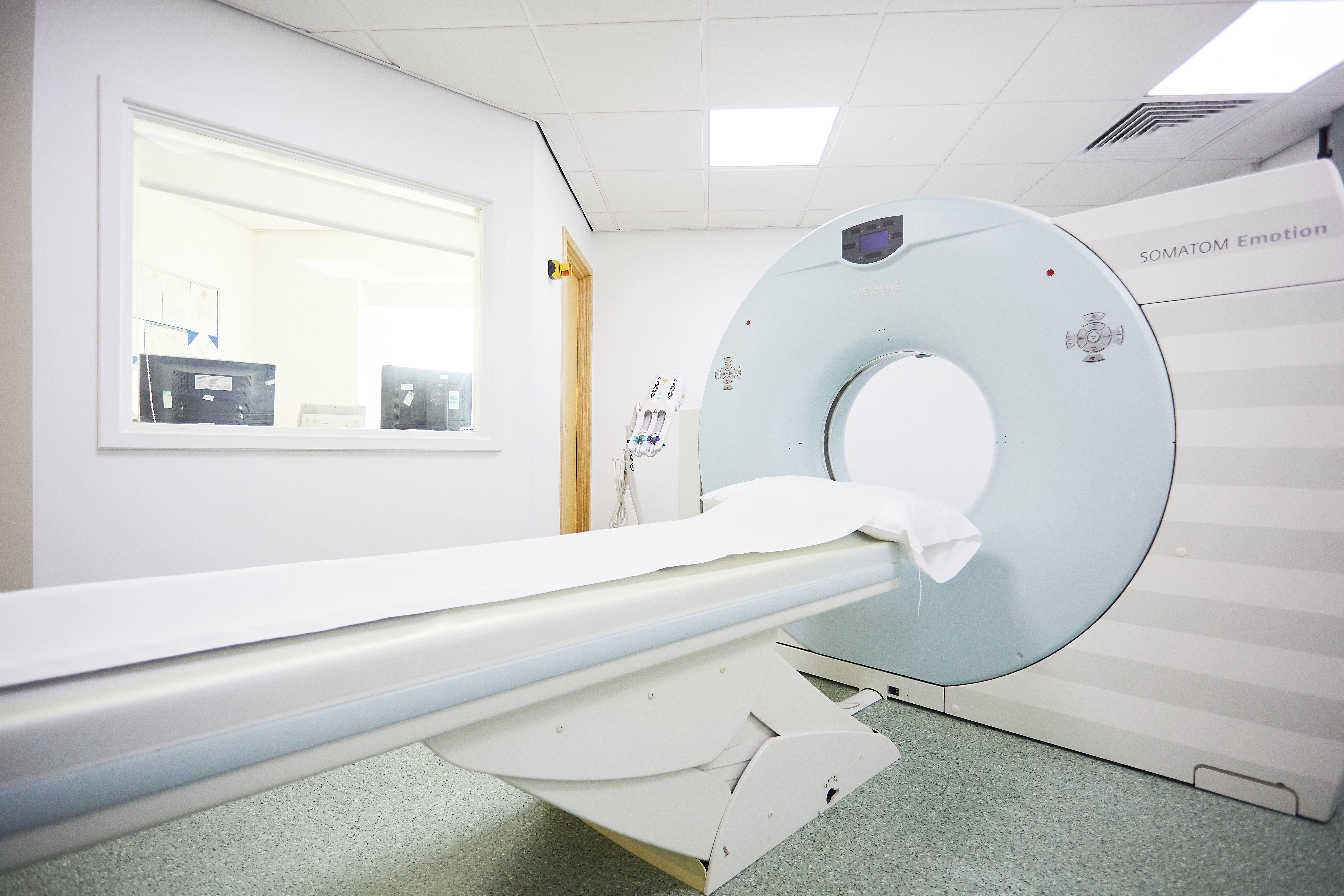
During a CT scan, the patient lies on a table, which slides into a large tube. This tube contains an x-ray machine that takes photos of the inside of the body during a short, painless process that usually takes no more than 15 minutes.
The pictures taken during the scan then get sent to a computer, where a radiographer assembles the photos to create a 3D image. These are then passed on to the radiologist who will produce an in-depth report on the findings.
Depending on the situation, it's also possible for a physician to evaluate the images separately.
What to tell your radiographer.
Some people cannot undergo a CT scan because the scanner can interact with certain metals. If you've had surgery that may have involved metal implants, it's important to inform the radiographer. You won’t be able to wear metal jewellery and will need to remove any piercings. If you’re pregnant you may be advised to have an ultrasound rather than a CT Scan.
Can I have a copy of my images?
Radiology images can be sent when requested. We are unable to send radiology images directly to NHS general practitioners; image transfers to NHS services must follow established clinical pathways and secure exchange platforms. We do not provide printed copies, postal delivery, or screenshots of imaging; images are sent via electronic transfer using Image Exchange Portal (IEP). Images will only be released to patients or third parties once the formal report has been issued
Enquire About Our Private CT Scans
A member of our team will be in touch with you to discuss your requirements.