
X-ray, MRI, Ultrasound and CT explained
How to Choose the Right Scan for Knee Pain
- Fast, accurate diagnostics
- Appointments in days, not weeks
- No referral needed
- Expert guidance to help you choose the right scan
- Scans available 7 days a week
If you're dealing with knee pain, swelling, stiffness, locking or reduced movement, imaging can help find the cause.
But not every scan looks at the same thing.
Choosing the right scan for your knee pain depends on your symptoms, your injury history, and what your clinician needs to see.
Here, we'll walk you through the differences between a knee X-ray, MRI, ultrasound and CT scan, so you know what to expect before you book.
Our bookings team can also answer any questions you may have to help find the right scan to pinpoint the cause of your knee pain.

X-Rays
X-rays use radiation to pass through your body, absorbed by different tissues at different rates. This is why denser matters such as bones, appear white, while softer tissue appears darker grey. Breaks and fractures in your knees will show up as little dark patches and the outlines of dislocations or abnormal alignments such as bone spurs become more obvious.
Best for:
bone fractures, dislocations, joint space narrowing, bone spurs and evaluating osteoarthritis.
When is it used:
Usually the first step for most knee complaints, especially after a physical injury or when age-related arthritis is suspected.
Pros/cons:
Fast and inexpensive, but cannot see soft tissues like ligaments or menisci (these act as shock absorbers to cushion the bones when you walk, jump or bear weight).
MRI
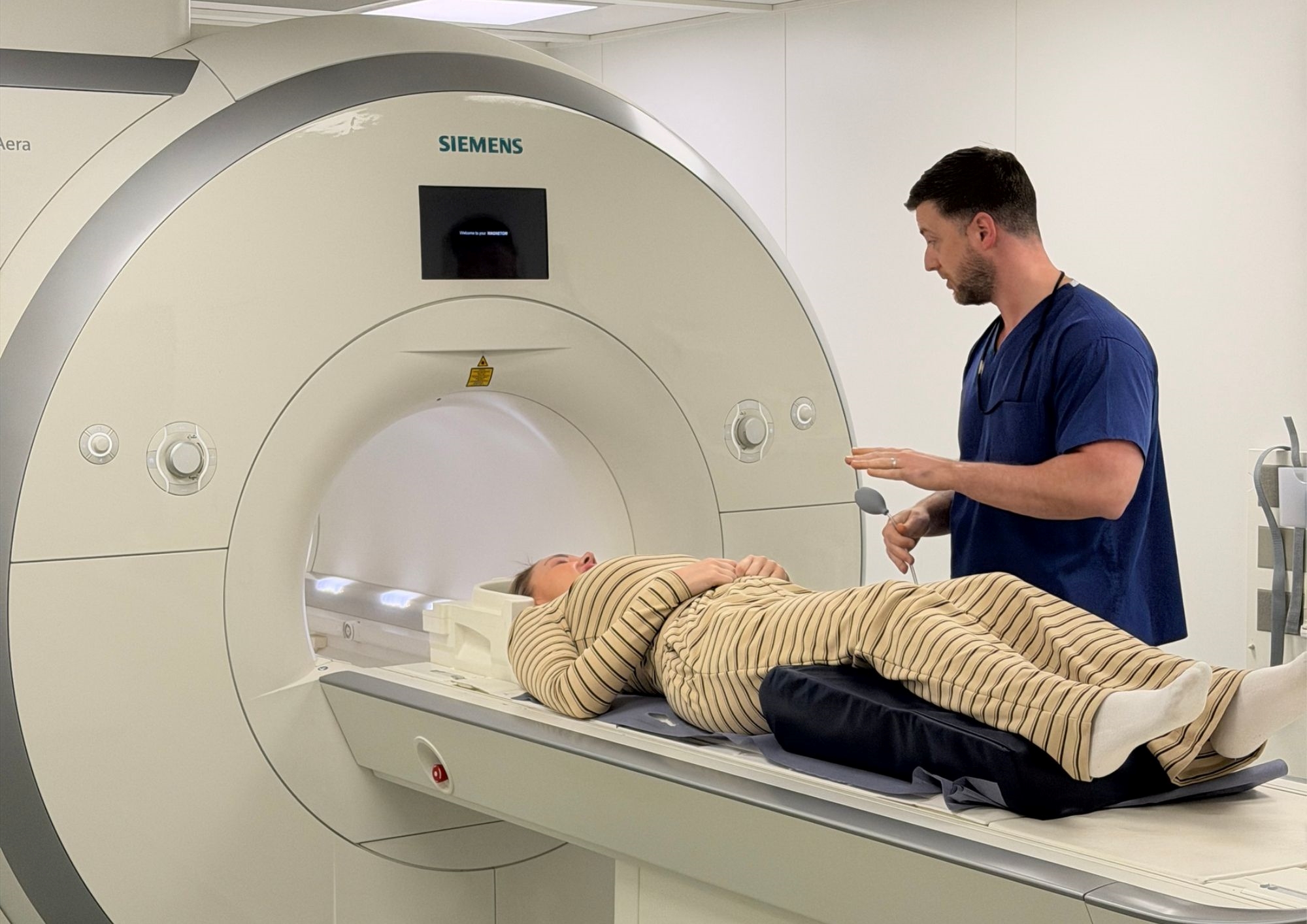
An MRI uses magnetic fields and radio waves to create images. The powerful magnets and radio frequencies cause the atoms in your body to temporarily realign. When the radio waves are switched off, these then go back to their original alignment. The result being a very detailed image of your knee, not just the bones and general structure but the soft tissues too. We use MRIs to diagnose damage, swelling, infections, pain and weakness which we would not be able to explain in standard X-rays.
Best for:
soft tissue imaging
When is it used:
An MRI is considered the gold standard for deep internal knee injuries, knee instability, locking or when an X-ray is normal but the pain and swelling continues.
Pros/cons:
No radiation and highly detailed, but more expensive, takes longer and cannot be used with certain metal implants.
Ultrasound
An musculoskeletal (MSK) ultrasound uses high-frequency sound waves to create the imagery inside your knee. The major difference with ultrasound is it is dynamic; we can move your leg around to see what is happening inside the joint in real-time. It is also useful for guided injections inside the knee, helping us to deliver long-term steroids for pain relief into specific areas of the knee.
Best for:
Surface structures, tendon irritation, Baker’s cysts (a visible lump directly behind the knee), fluid build-up and localised inflammation.
When is it used:
For dynamic, real-time viewing of moving tendons or guiding needle injections, for example, steroid or PRP (Platelet-Rich Plasma) injections.
Pros/cons:
Quick, dynamic and radiation-free, but cannot penetrate deep inside the joint to see internal ligament or meniscus tears.
CT Scan
A CT scan is similar to an X-ray in the sense that it uses X-rays to generate images. The difference being that it takes multiple images from different angles. These are then processed to create a cross-section of your knee joint, which is useful for examining the bones around your knee and evaluating how fractures are healing.
Best for:
Complex bone fractures, bone alignment and pre-surgical planning such as robotic joint replacements.
When is it used:
Mostly reserved for severe accidental trauma or detailed 3D bone architecture.
Pros/cons:
Provides unmatched 3D bone detail and works with metal implants, but does expose you to minimal X-ray radiation.
In short, if you have a:
Suspected bone problem or arthritis: start with an X-ray.
Suspected ligament, cartilage or meniscus injury: an MRI is best.
Suspected surface tendon issue, cyst or guided injection, an ultrasound is best.
Complex trauma or surgical bone planning: a CT scan is typically chosen.
Do you actually need a scan?
Not every case of knee pain requires imaging. Many minor strains and soft tissue niggles settle with rest, ice and time.
A scan is usually worth considering if you have:
Pain that hasn't improved after a few weeks
Swelling that keeps returning or won't settle
A knee that locks, catches or gives way
Reduced range of movement
Pain following a specific injury, twist or fall
A popping or tearing sensation at the time of injury
Ongoing instability when walking, running or changing direction
Picked up a knee injury playing sport? A sports injury consultation with one of our clinicians can help you understand what’s going on, find out whether you need a scan and get you back to doing what you love.
Not every case of knee pain will require imaging at all. Most mild knee pain improves with rest, painkillers or physiotherapy. One of our private GPs can usually diagnose an issue through a physical examination.
Why choose Pall Mall for your knee scan?
No GP referral required
Fast access, book directly with same-week appointments
Highly experienced radiologists with detailed reports
Choice of scan type
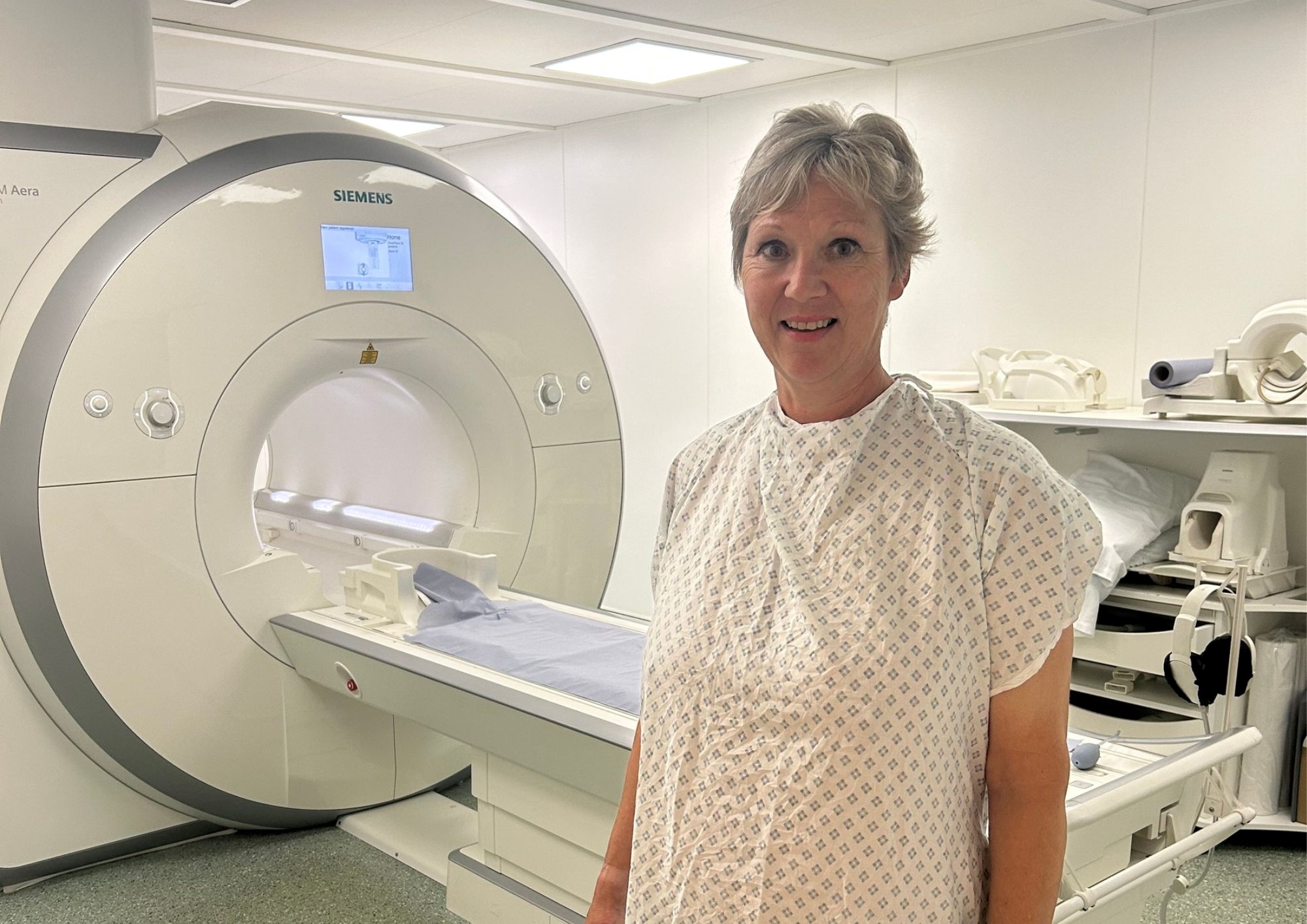
Comfortable wide-bore scanner for reduced claustrophobia (MRI)
Clear, easy-to-understand radiologist report
Next steps support: physiotherapy, orthopaedics, pain management
How the process works
Choose your scan: make an enquiry online and either self-refer or speak to one of our private GPs. We will review your scan and confirm your appointment within the next 24 hours.
Attend your scan: Most scans take 15–45 minutes depending on type.
Get your results: a consultant radiologist reviews your scan and produces a detailed report within 5-10 working days.
Discuss next steps: receive a GP call to walk through the findings. If anything needs a follow-up, we will guide you through it.



How much does a knee scan cost?
| Scan Type | Single Price | Both Price |
| X-ray | £130 | £260 |
| MRI | £388 | £653 |
| Ultrasound | £195 | £390 |
| CT | £430 | £550 |
Using private medical insurance? We have direct settlement arrangements with all the major insurers. Find out how to use your medical insurance with us.
Prefer to spread the cost? Medical finance is available on selected knee scans, so you can pay in manageable monthly instalments.
FAQs
Which scan is best for knee pain?
MRI is generally best for looking at internal structures such as ligaments, cartilage and the meniscus. X-ray is better suited to bone injuries, and CT is used for complex fractures. The right scan depends on your symptoms and injury history.
What not to do before an MRI scan of the knee?
As an MRI uses a strong magnet, it’s best to leave anything metal at home, including jewellery, watches and piercings. Try to wear comfy clothes without metal zips, buttons, poppers or underwires, or we can give you a gown to change into. It’s also worth skipping magnetic eyelashes, metallic hair clips and any make-up or hair extensions that might contain metal. If you have any metal implants or devices, just let us know before your scan and we’ll check everything’s safe for you.
Can an X-ray show a ligament or meniscus injury?
No. X-rays are effective for bones and joint alignment, but they don't show soft tissue structures like ligaments, tendons or the meniscus in any detail. If a soft tissue injury is suspected, MRI is usually needed.
Do I need a referral for a private knee scan?
No, you can book a private knee scan at Pall Mall Medical without a GP referral. If you're unsure which scan is appropriate, book a private GP appointment to discuss your symptoms first.
Is ultrasound useful for knee injuries?
Yes, for certain problems. Ultrasound is great for looking at things close to the surface of your knee, like tendons, fluid build-up or a Baker’s cyst. Because it works in real time, we can also watch how your knee moves during the scan. It can’t see as deep inside the joint as an MRI though, so if we need a closer look at your meniscus or ligaments, an MRI is usually the better choice.
When would I need a CT scan instead of an MRI?
A CT scan is usually the go-to for more complex bone problems, like a fracture that needs a really detailed look, or when a surgeon is planning an operation such as a knee replacement. It’s also a good option if you have metal implants that mean an MRI isn’t suitable. For most other knee problems, especially injuries to the ligaments, cartilage or meniscus, an MRI will give us the clearest picture.
How quickly will I get my results?
Most reports are delivered within 5-10 working days.
What if my knee pain doesn't need a scan?
That’s completely fine, and often good news. Not all knee pain needs a scan, and mild or recent pain often settles with rest, painkillers or physiotherapy. If you’re not sure, a consultation with one of our clinicians is a great place to start. They’ll examine your knee, talk you through what’s going on and let you know whether a scan would help or if another treatment is worth trying first.



Enquire About a Knee Scan at Pall Mall
A member of our team will be in touch with you to discuss your requirements.