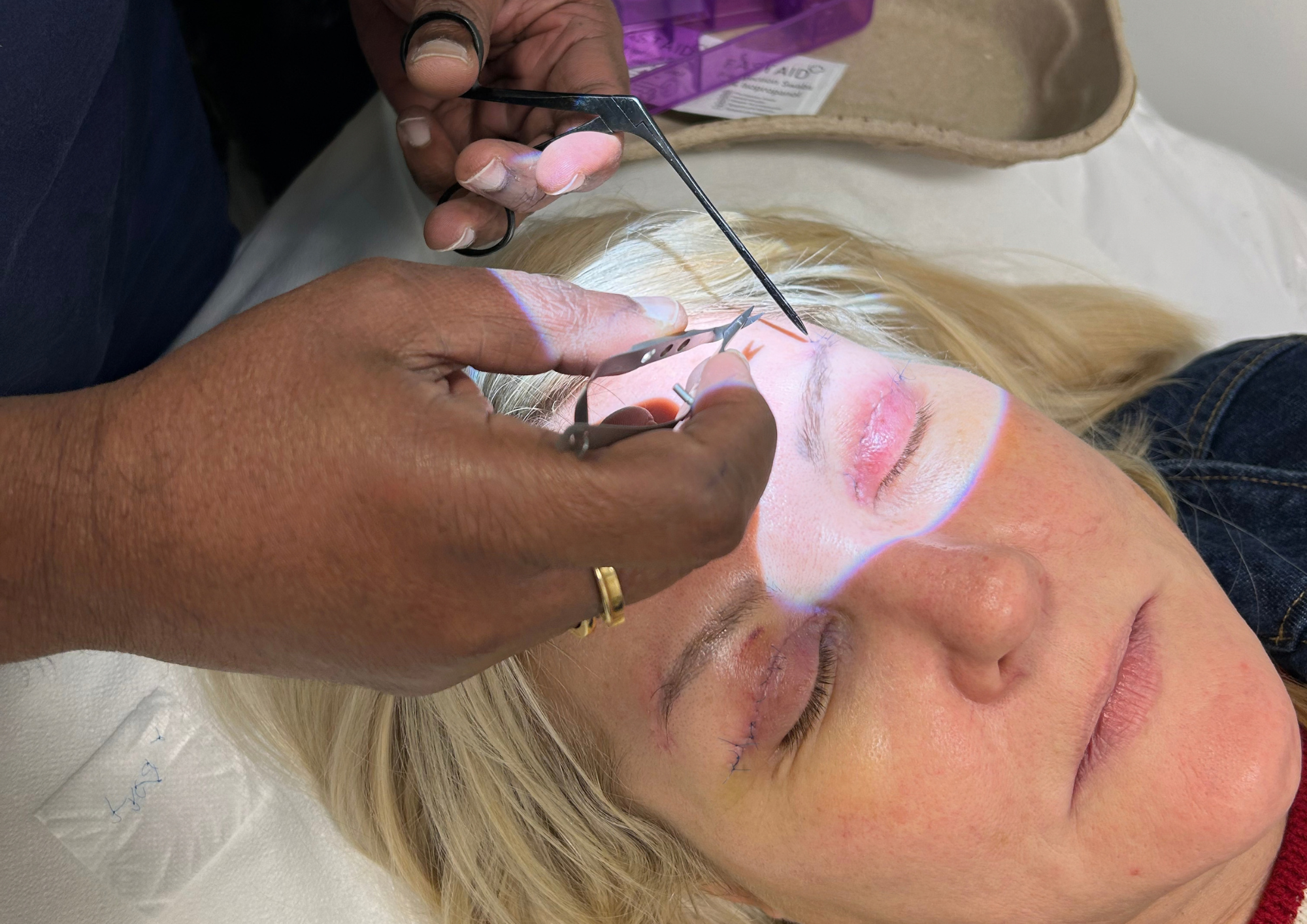
The first few days are all about taking it easy and letting your eyes rest.
Swelling and Bruising: Swelling, tightness and some bruising are completely normal. Your eyes may water, feel sensitive to light or look a little blurry, especially if you're using thick eye drops.
Pain & Discomfort: Mild discomfort, often at the corners of the eyes, is normal and usually managed with paracetamol or surgeon-approved painkillers for 2 to 3 days.
Sleeping Position: Sleep on your back with your head raised on two or three pillows to help reduce swelling (even upper eyelid surgery can make the lower lids puffy).
Light Sensitivity: Relax in a dim room with a podcast or audiobook, and rest a cool, towel-wrapped compress over your eyes for 10 to 15 minutes at a time to ease swelling.
Moisturising: Use the eye drops or ointment provided by your care team to keep your eyes comfortable.
Keeping Clean: Gently clean around your eyes with plain water and keep dressings dry. A front-opening top saves you pulling anything over your head.
Avoid Smoking: Smoking and nicotine can slow healing, so it's best to pause during recovery.