Menu Menu

What do the proposed new cosmetic procedure rules mean for patients?

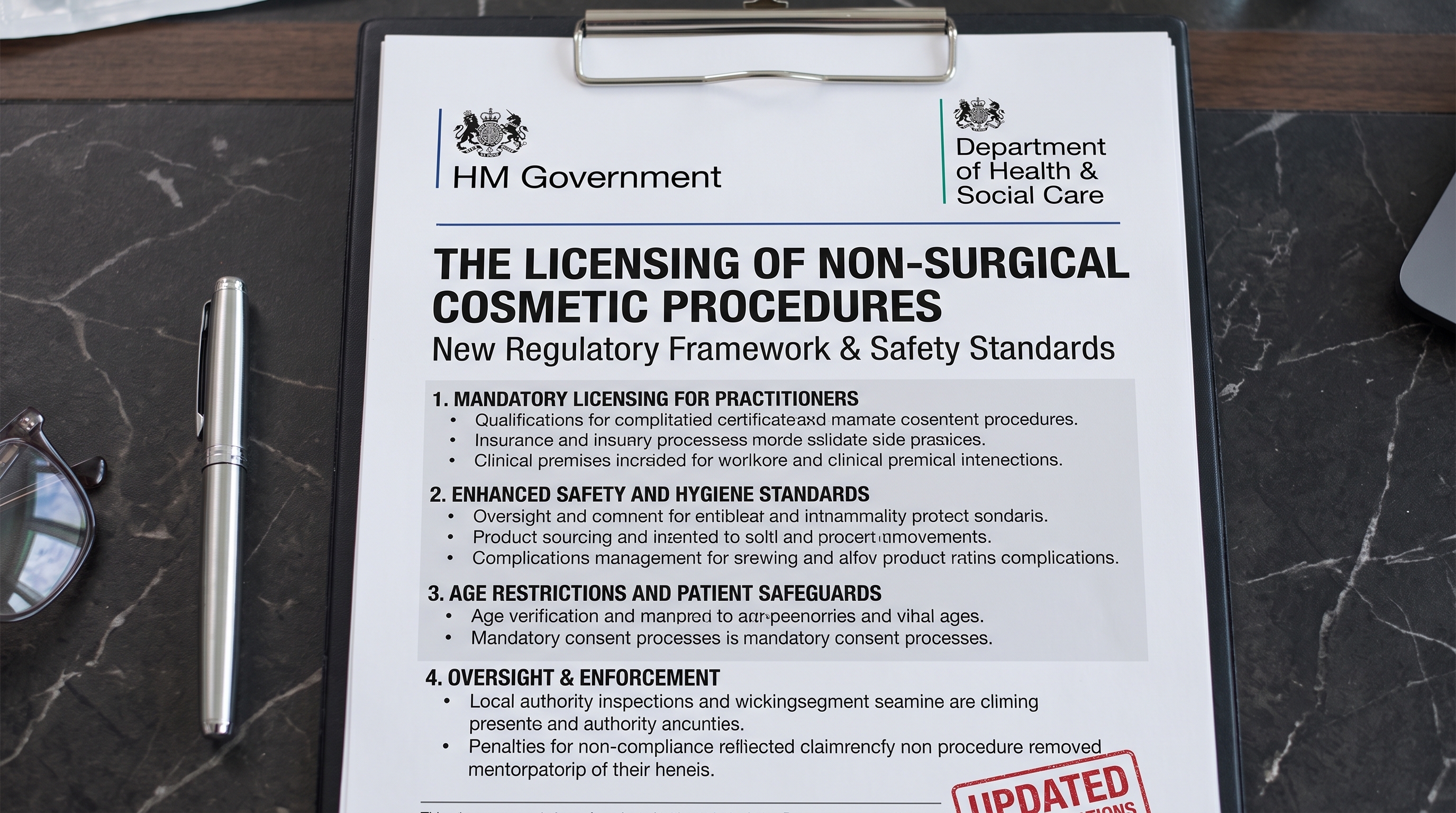
The Government has announced plans to introduce tighter restrictions around who can perform some of the highest-risk cosmetic and wellbeing procedures in England.

The proposals, announced by the Department of Health and Social Care on 21 October 2026, are intended to introduce stronger safeguards for patients undergoing certain cosmetic treatments.

But what is actually changing, which procedures could be affected, and what does it mean if you are currently considering cosmetic treatment or surgery?

You can read the official Government announcement here.

What has the Government proposed?

Under the proposals, cosmetic surgery would be restricted to doctors only. This would include body filler procedures such as liquid Brazilian Butt Lifts (BBLs), which would be legally classified as cosmetic surgery.

Certain high-risk non-surgical treatments would be restricted to doctors, dentists and nurses, midwives or pharmacists who are qualified independent prescribers.

These treatments include deep chemical peels, vampire facials, dermal micro-coring and some lasering procedures.

The Government is also proposing that people under the age of 18 would be prohibited from undergoing these procedures, with exceptions for NHS treatment or where a healthcare professional is treating a medical condition.

A separate licensing framework is planned for lower-risk treatments, such as anti-wrinkle injections and lip fillers.

Importantly, these measures are not currently law. The proposals apply to England only and remain subject to consultation and the parliamentary process, with the consultation remaining open until 13 January 2027.

Why are tighter rules being proposed?

The proposals are focused on strengthening safeguards around procedures that can carry significant risks if they are performed without the appropriate training, clinical oversight or ability to recognise and manage complications.

For patients, this also brings greater attention to something that should already form an important part of choosing a cosmetic provider: understanding not only what procedure you are having, but who is performing it, their experience, where it will take place and what happens if something does not go to plan.

At Pall Mall, we believe appropriate qualifications are an essential part of this, but qualifications alone should never be the only measure of a practitioner's competence.

Professor Ullas Raghavan, ENT & Facial Plastic Surgeon, comments:

“We welcome proposals that put stronger safeguards around high-risk cosmetic procedures. However, appropriate qualifications alone are not enough. Surgeons must have the specialist training, experience and competence required for the specific procedures they undertake.

“The Royal Colleges of Surgeons have already established a Cosmetic Surgery Certification Scheme, following a government-commissioned review, to recognise appropriately trained and experienced surgeons. However, certification remains voluntary, and I believe these standards must be enforced more strictly to prevent inadequately trained practitioners from putting patients at risk of serious, potentially life-changing complications.

“Patient safety must always come first. Stronger regulation, informed consent and appropriate clinical oversight are essential to protecting patients and raising standards across the cosmetic surgery sector.”

What does this mean if you're considering cosmetic surgery?

While the proposals primarily focus on specified cosmetic and wellbeing procedures, the wider conversation around regulation is a useful reminder for anyone considering cosmetic treatment or surgery.

Choosing a provider should go beyond comparing procedures, results and prices.

Before going ahead, patients should feel comfortable asking who will be treating them, what qualifications and procedure-specific experience they have, where their procedure will take place, what the potential risks and alternatives are, and what aftercare is available.

You should also be given the opportunity to understand the expected recovery, possible complications and realistic outcomes before providing informed consent. These principles form part of Pall Mall's wider approach to helping patients make informed choices.

At Pall Mall, we believe patients should have access to clear information about the professionals responsible for their care. That’s why you can find details of our surgeons’ qualifications, experience and specialist expertise on their individual profiles. Our most recent CQC report is published here.

Get to know our surgeons and explore their qualifications before taking the next step.

Are the new cosmetic procedure rules already in force?

No.

The measures announced in October 2026 are proposals, rather than new rules that have already taken effect.

The Government consultation is open until 13 January 2027, after which the proposals would need to progress through the appropriate process before any new legal restrictions come into force.

This distinction is important. Patients should be wary of claims suggesting that particular treatments have suddenly become illegal or that every cosmetic treatment will be subject to the same restrictions.

What should patients look for now?

You don't need to wait for new regulations to ask more questions about your care.

Whether you are considering cosmetic surgery or a non-surgical procedure, take the time to understand the credentials and relevant experience of the person treating you. Ask about the environment in which your procedure will take place, make sure the risks and alternatives have been properly explained and understand what support will be available during your recovery.

Most importantly, you should never feel pressured into making a decision before you feel fully informed.

The proposed changes may alter how parts of the cosmetic treatment sector are regulated in the future, but the principle behind them is already relevant today: patients deserve clear information and appropriate clinical standards when making decisions about their care.

Nurses at Pall Mall Medical

Considering cosmetic surgery?

At Pall Mall, our clinical team is here to help you understand your options, ask questions and make informed decisions about your cosmetic surgery journey.

For further information about the proposed regulations, visit GOV.UK.

What to look for in a cosmetic surgery clinic

  • A qualified, experienced surgeon: Check their GMC registration, relevant Specialist Register entry and experience in your chosen procedure.

  • A regulated hospital or clinic: In England, check CQC registration and inspection reports; elsewhere in the UK, check the equivalent regulator. 

  • A consultation with your operating surgeon: You should have time to discuss your health, goals and whether surgery is suitable for you.

  • Honest, balanced advice: Look for clear explanations of risks, benefits, recovery and alternatives, with realistic expectations about results. 

  • Clear aftercare arrangements: Understand your follow-up appointments, who to contact out of hours and how complications would be managed.

  • Transparent pricing: Get a written breakdown covering what’s included, exclusions and potential costs for further treatment. 

  • Time to decide: You should feel listened to and free to ask questions, seek another opinion or change your mind, without pressure to book. 


Related Articles

Cosmetic Crusaders: Why you should think twice before having surgery abroad
Discover why cosmetic surgery abroad can have associated risks and why opting for UK-based clinics like Pall Mall ensures safety, high-quality care, and trusted surgeons. Learn how Pall Mall prioritises your health and safety.
Pall Mall Fallback Image
Lauren Simon on Surviving a Botched Boob Job Abroad

After a low-cost boob job abroad became a nightmare, Lauren turned to Pall Mall for expert help and now advocates for honest conversations and tighter regulation of overseas cosmetic surgery.

Pall Mall Fallback Image
How to prepare for cosmetic surgery

Everything you need to know before your surgery!