Menu Menu

Tummy Tuck scars: What to expect

How Do Scars Differ by Type of Tummy Tuck?

The size and position of your scar will depend on the type of tummy tuck that's right for you. Whichever procedure you have, your scar will go through the same healing stages described in our timeline below. Larger or longer scars may take a little more time to settle, so it's worth talking to your surgeon about what's realistic for you.

Your surgeon will explain exactly where your incisions will be during your consultation, but here's a general guide to what you can expect.

Full tummy tuck

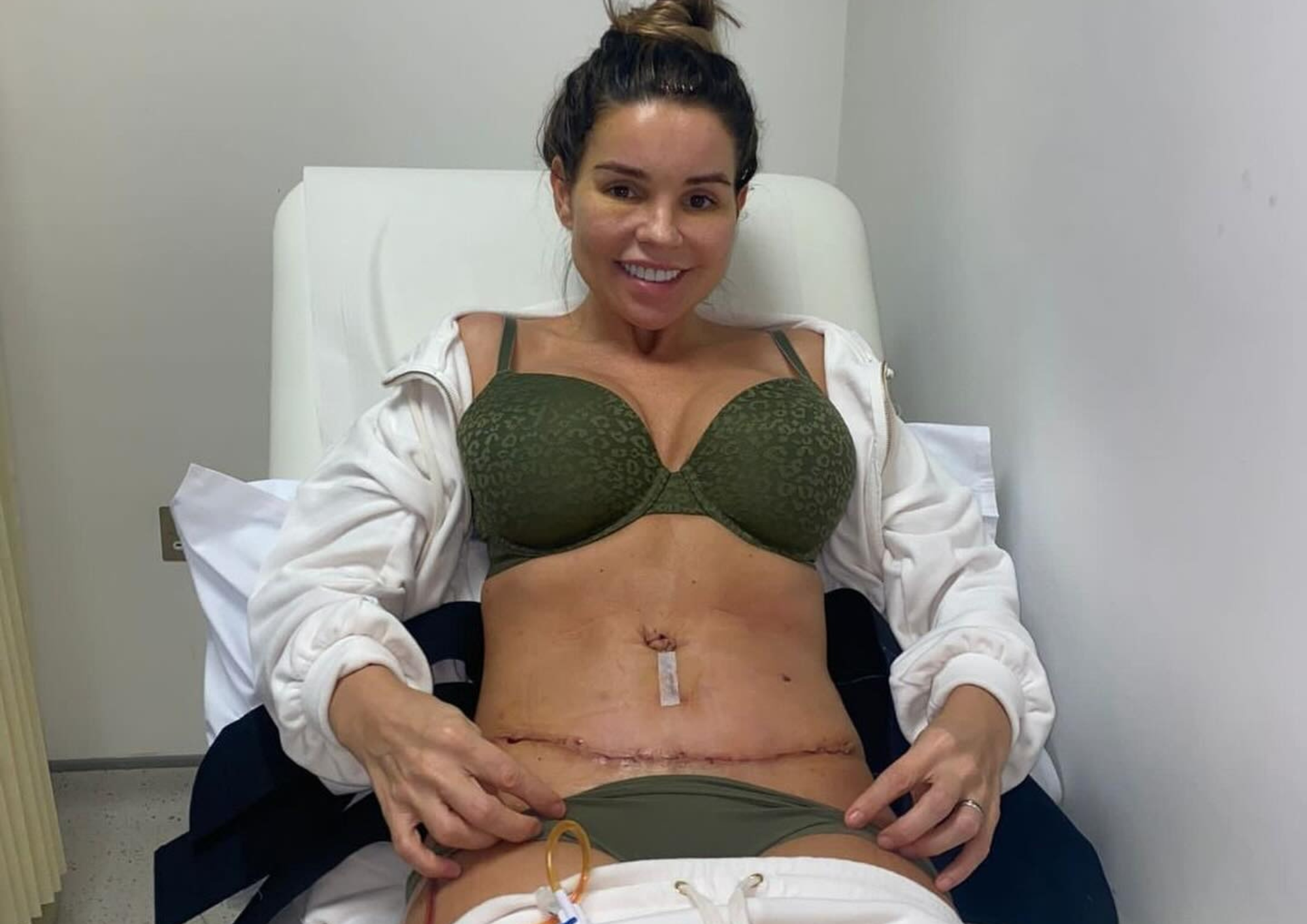
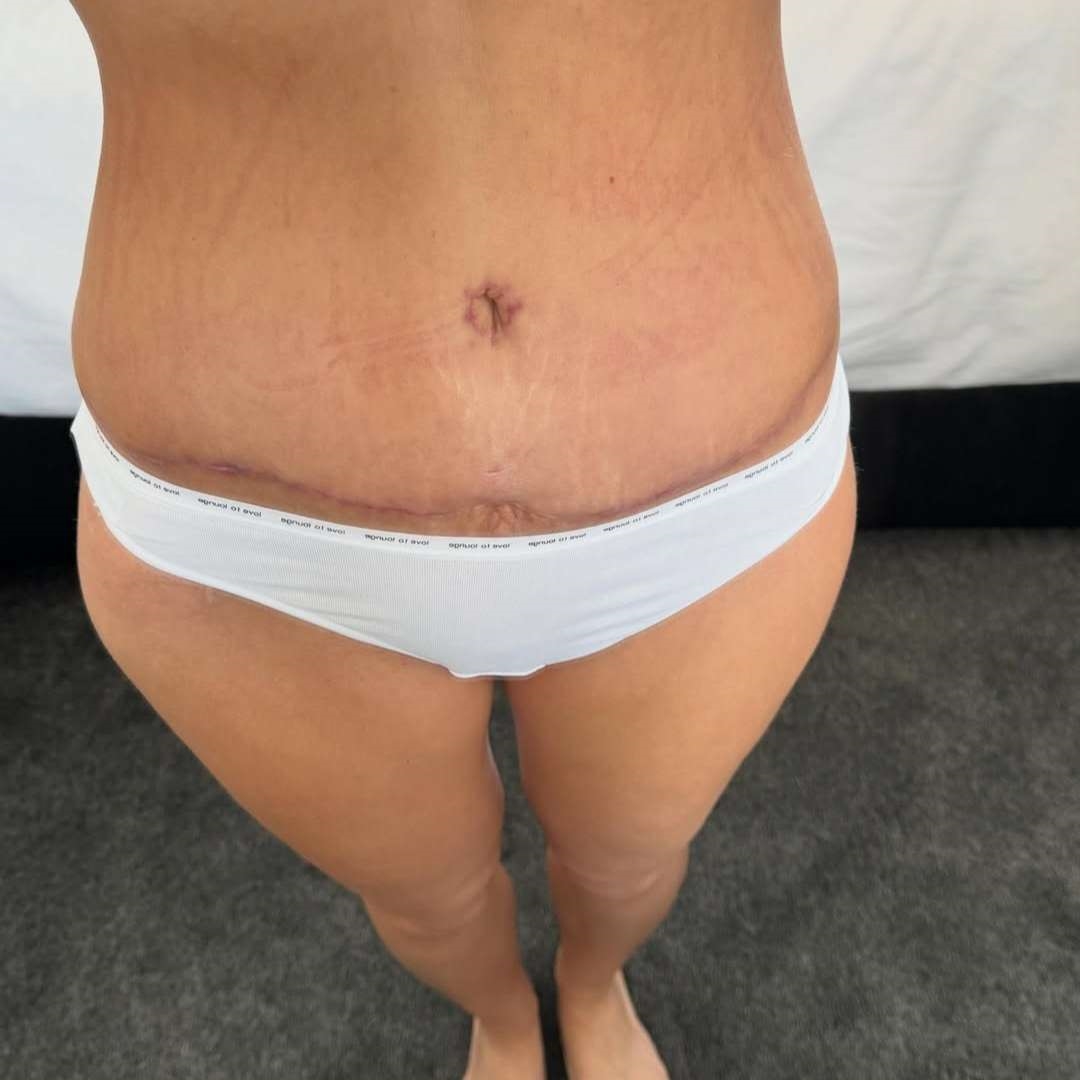
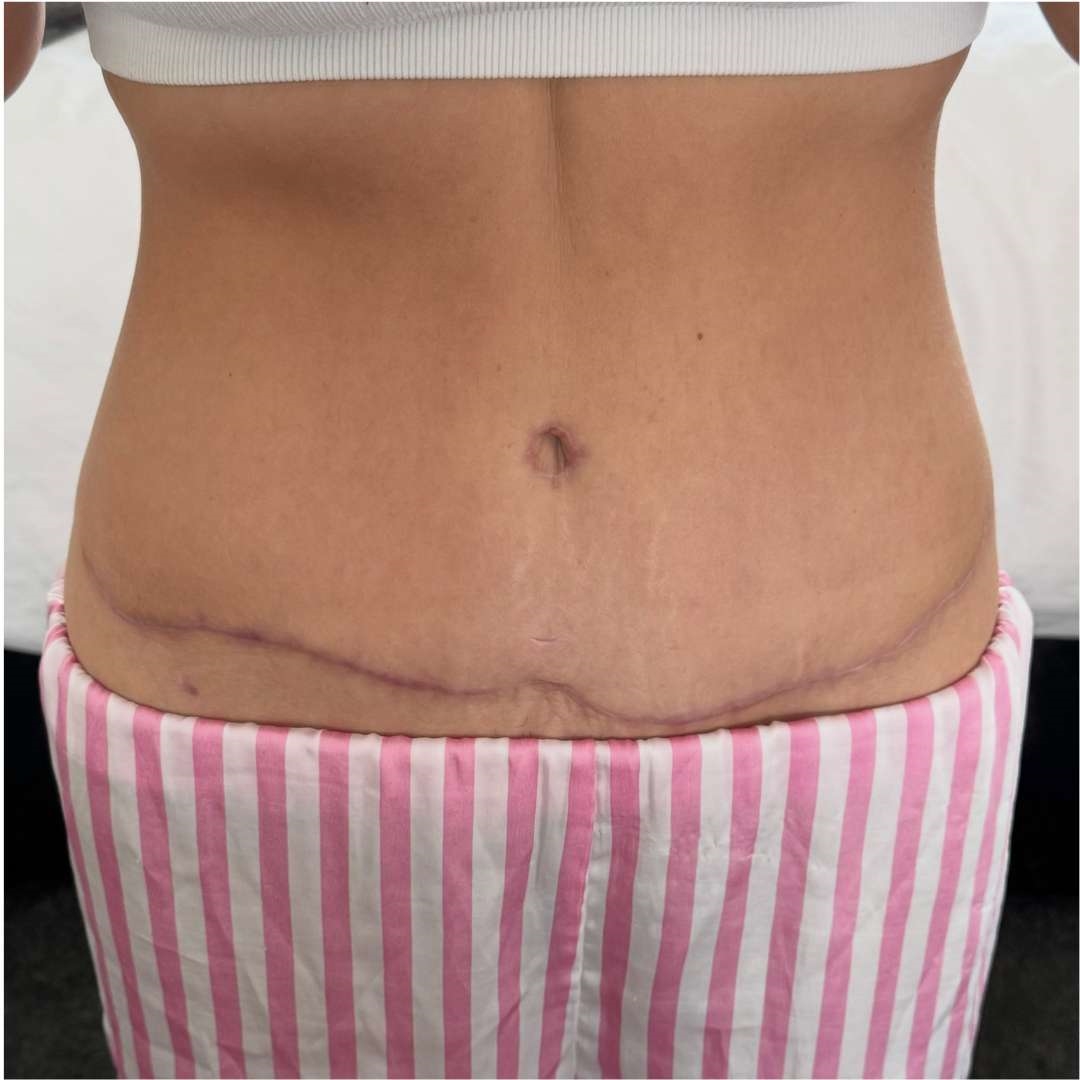
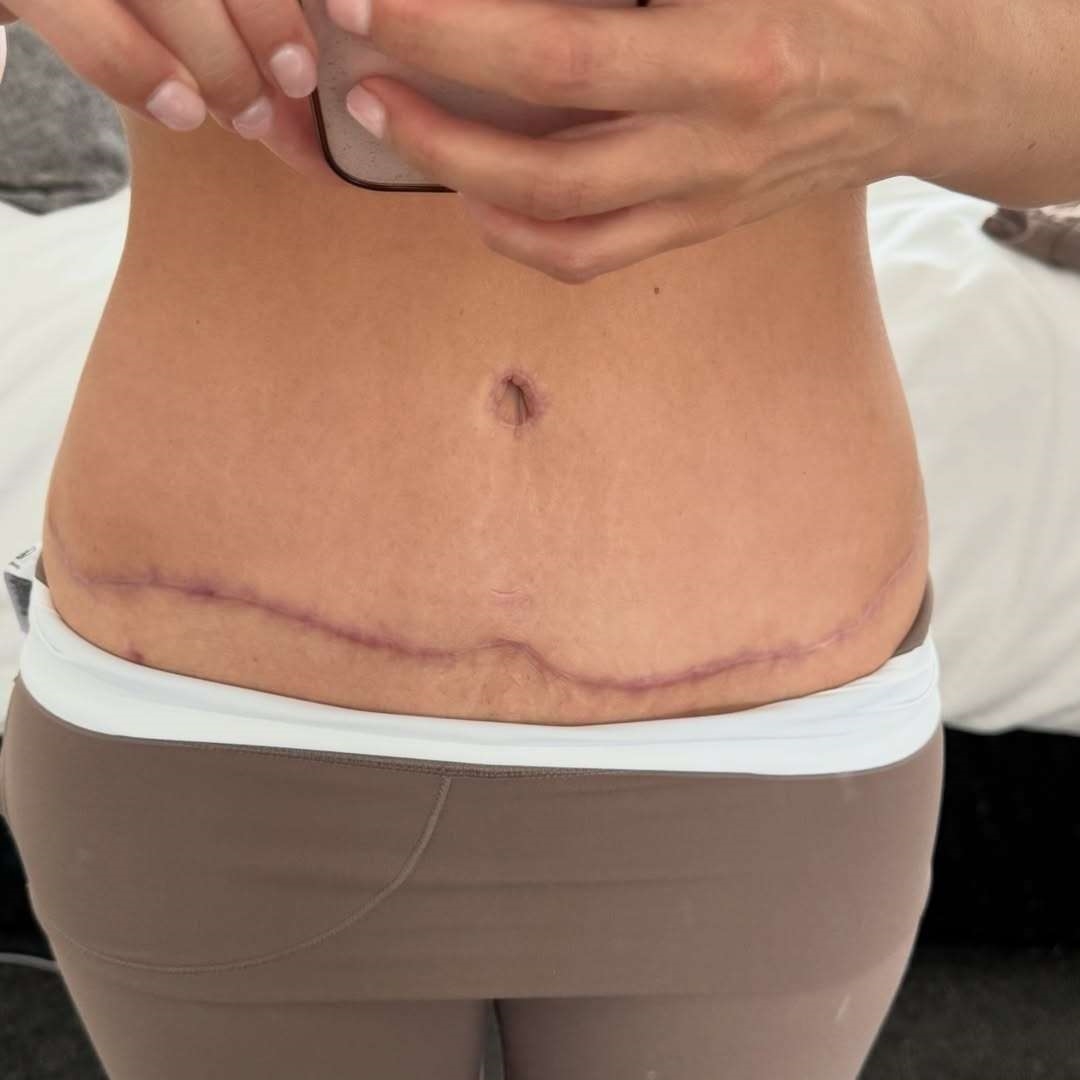
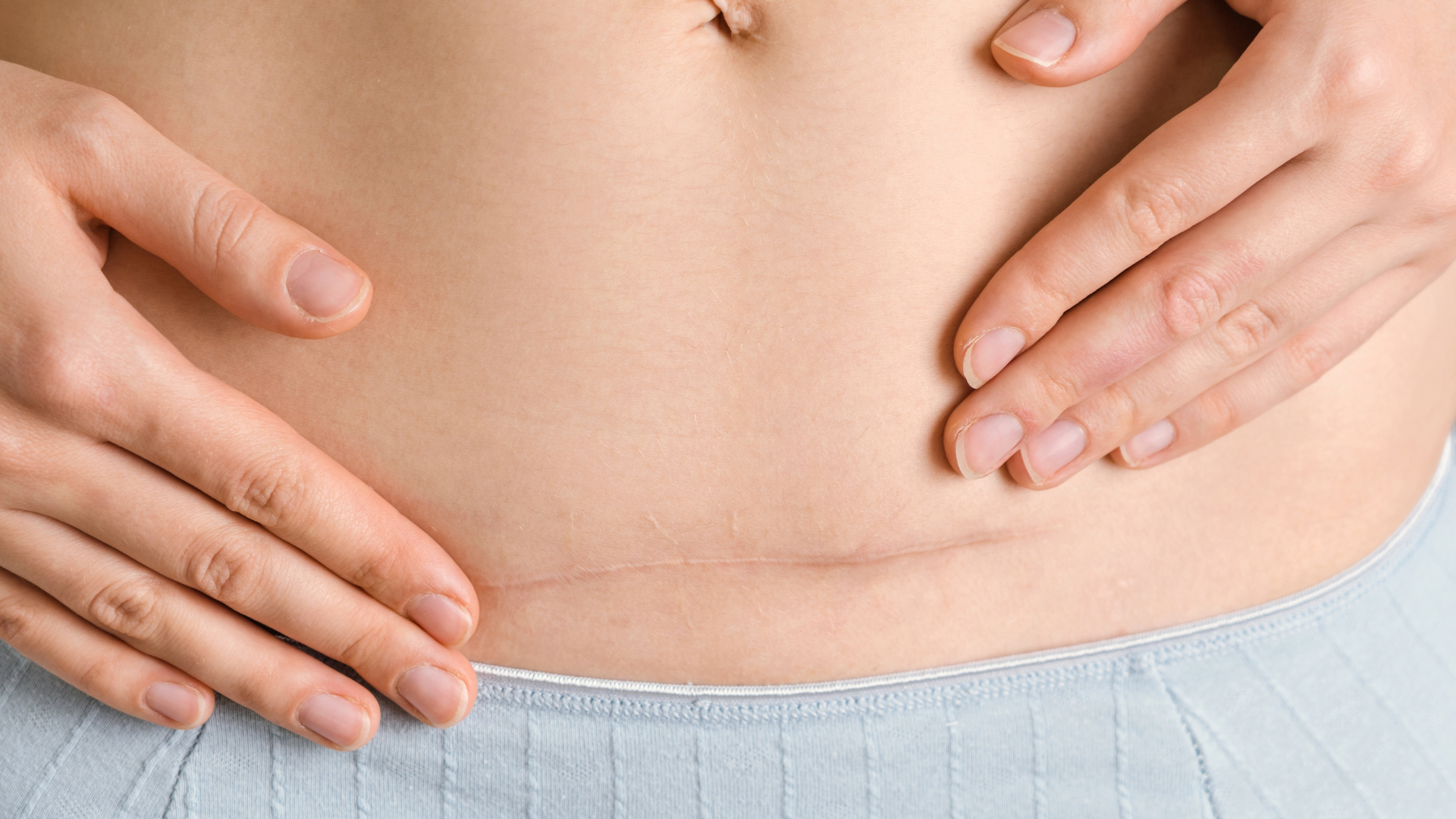
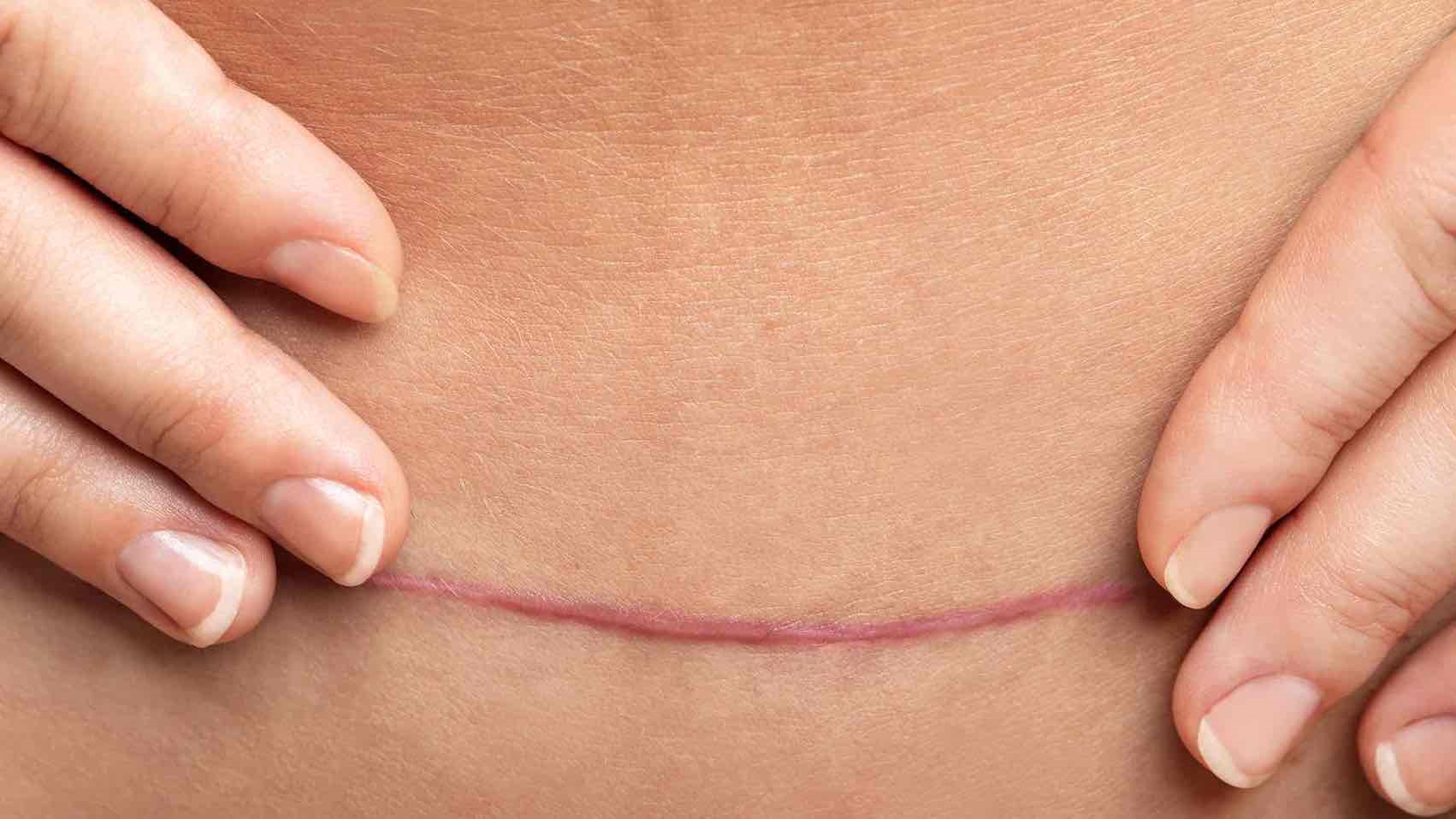
A full tummy tuck usually leaves a horizontal scar low across your tummy, running from hip to hip. It's typically positioned so it can be covered by most underwear and swimwear. As your belly button is usually repositioned, you'll also have a small scar around it.

Best suited to: Excess skin and fat above and below the belly button, often with loose or separated tummy muscles.

Mini tummy tuck

A mini tummy tuck focuses on the area below your belly button, so the scar is usually shorter than with a full tummy tuck. In most cases, the belly button isn't repositioned, so there's no scar around it.

Best suited to: A smaller amount of loose skin below the belly button, such as after pregnancy.

Fleur-de-lis tummy tuck

A fleur-de-lis tummy tuck combines the horizontal scar of a full tummy tuck with a vertical scar running up the centre of your tummy. While this means more scarring, it allows your surgeon to remove excess skin from side to side as well as top to bottom.

Best suited to: Significant excess skin, often after major weight loss.

360 tummy tuck

A 360 tummy tuck treats your tummy, sides and back in one procedure, so the scar continues around your waist to your lower back. It's usually positioned to sit within your underwear or swimwear line where possible.

Best suited to: Loose skin around your whole midsection, often after major weight loss.

Reverse tummy tuck

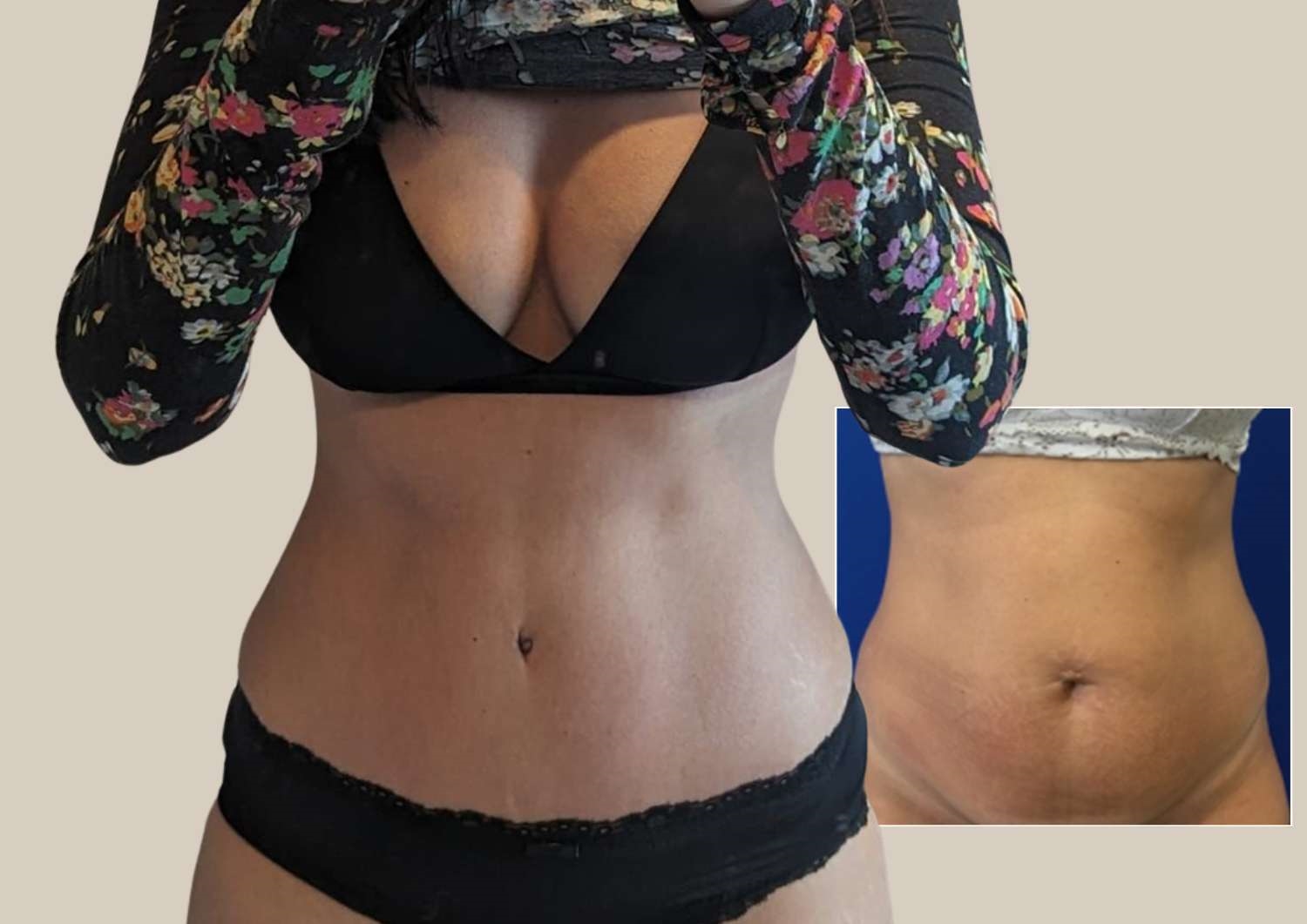
A reverse tummy tuck targets loose skin in the upper tummy, so the scar sits in the crease beneath your breasts rather than low on your tummy. Ampika Pickston's experience, which you can read about below, is a good example of this procedure.

Best suited to: Loose skin above the belly button.

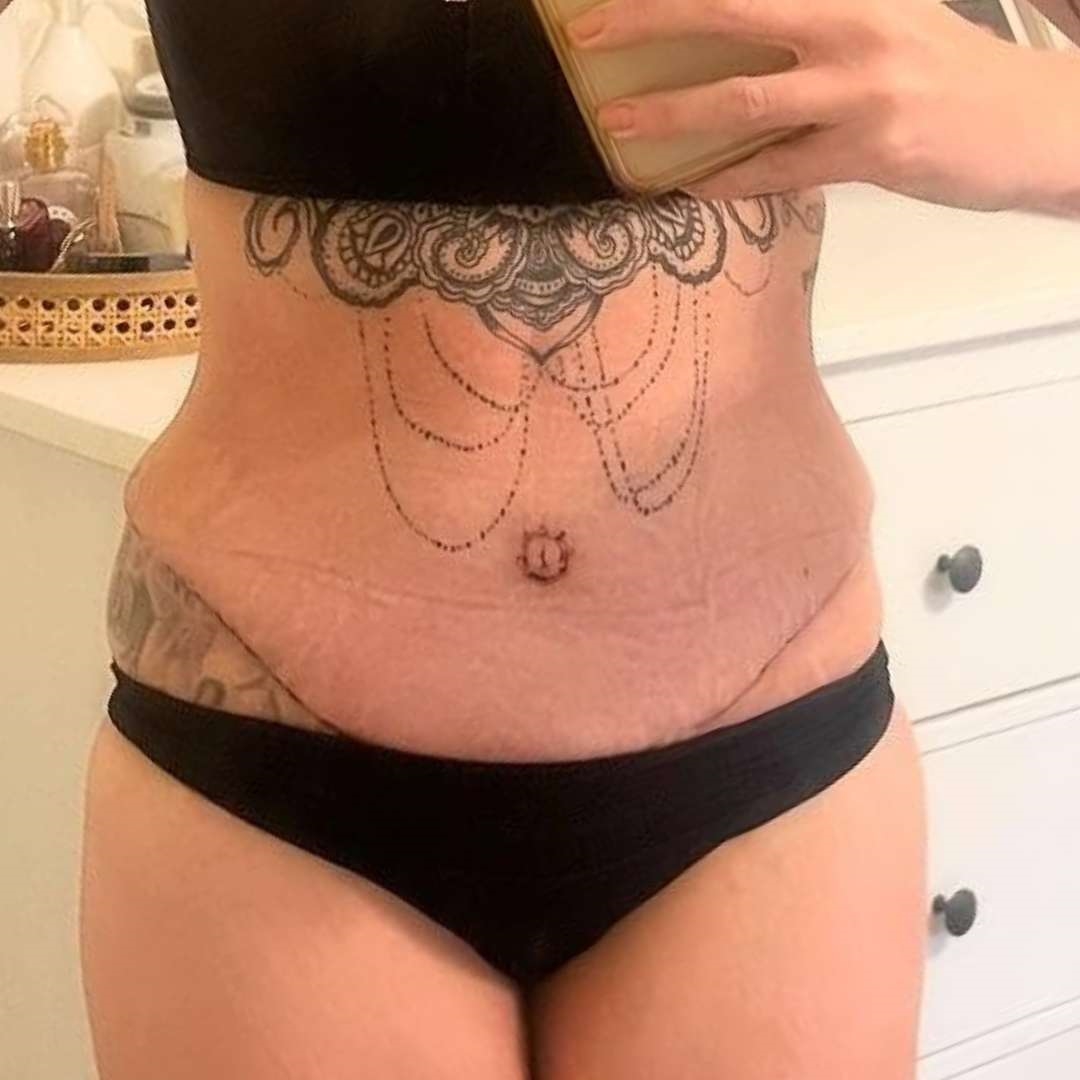
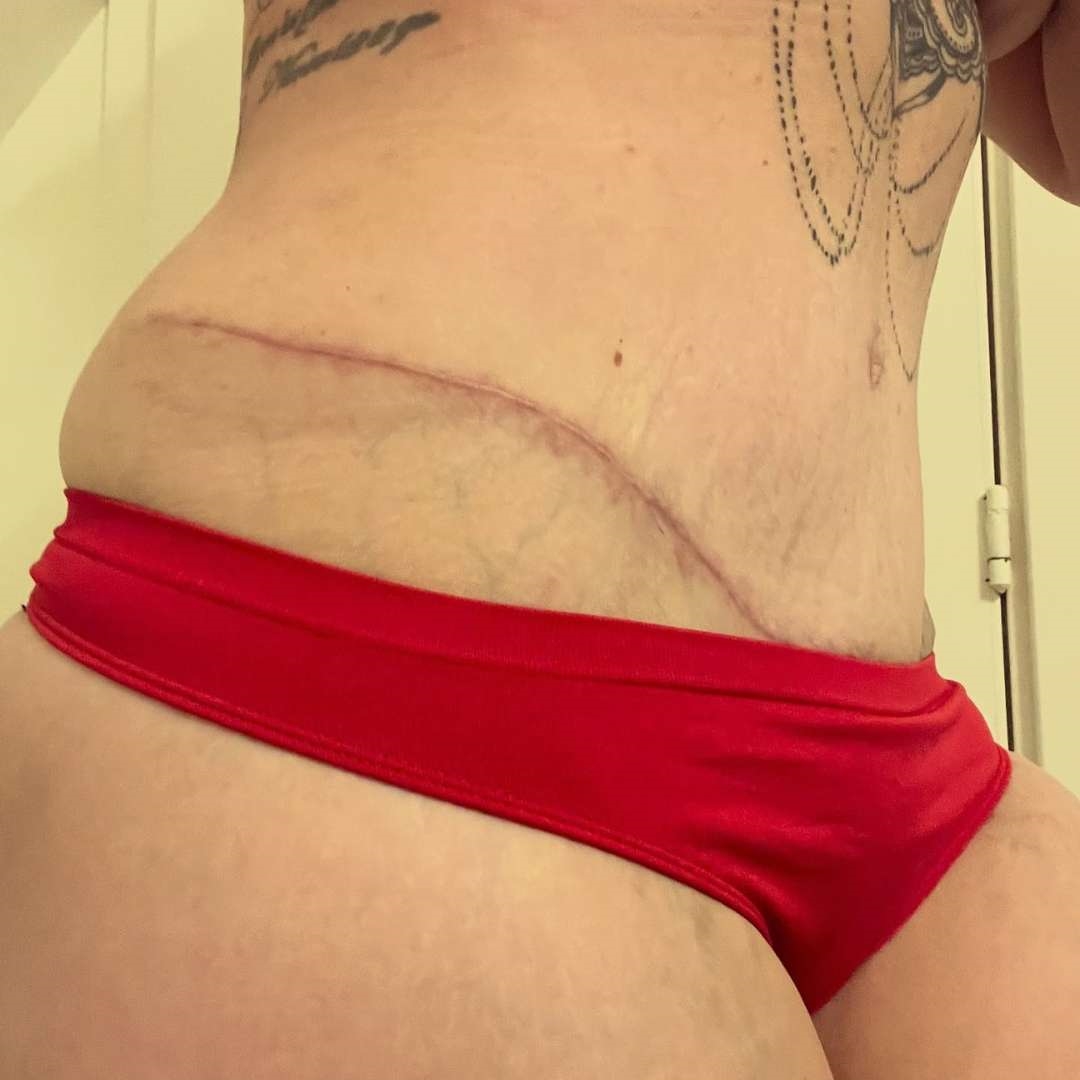
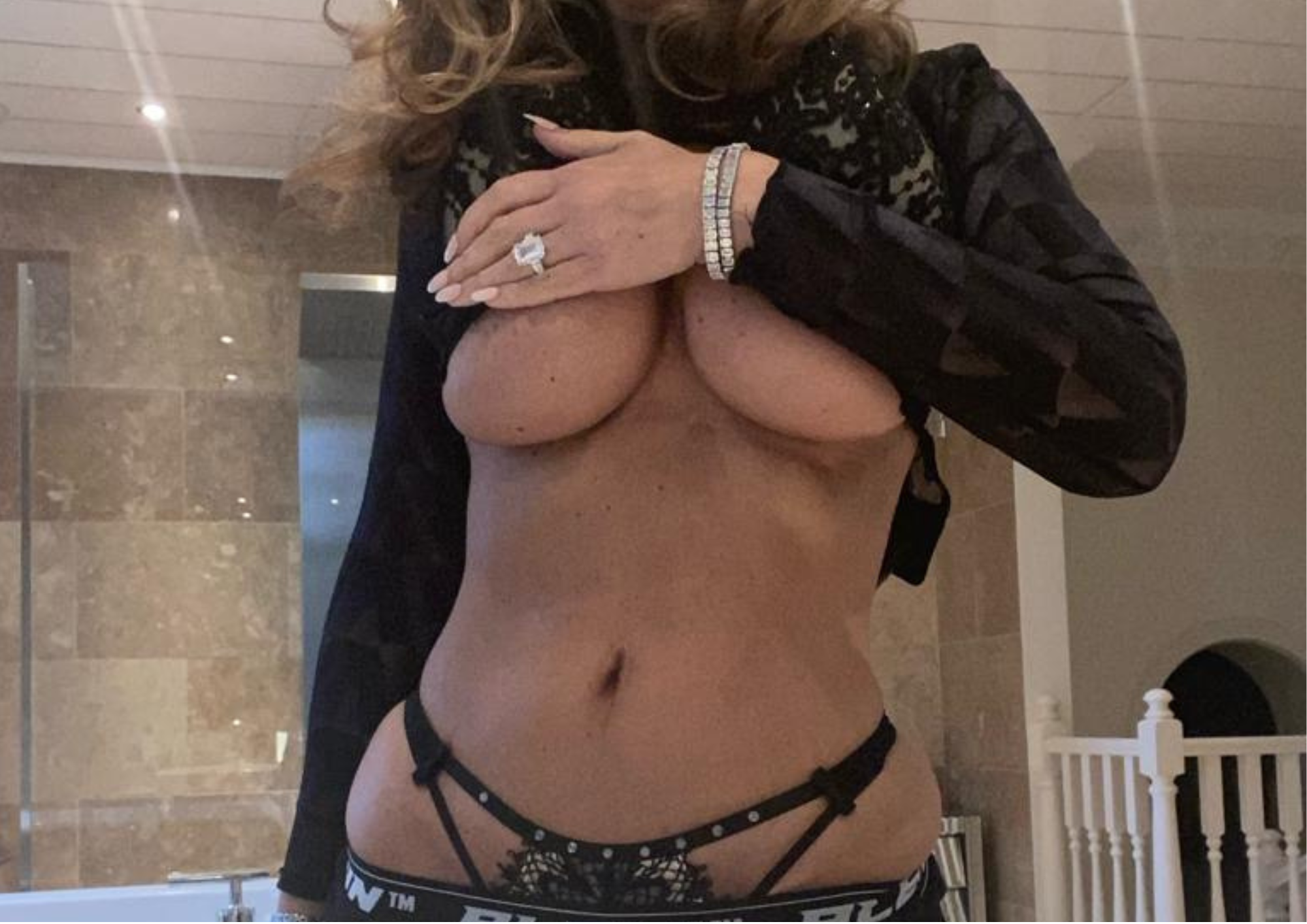
Tanya Bardsley’s Tummy Tuck Scarring

Tummy Tuck Scar Timeline: What to Expect

Every scar heals at its own pace, and things like your skin type, genetics, the type of tummy tuck you've had and how closely you follow your aftercare all play a part. But knowing what's typical at each stage can help you feel more relaxed about how your scar is changing. For a look at your wider recovery, see our guide to tummy tuck recovery week by week.

If you're ever unsure about how your scar is healing, our team is always here to help. If you have chest pain, difficulty breathing, or pain and swelling in one leg, call 999 or go to your nearest A&E.

Immediately after surgery

What it looks like: Your incision will be covered with dressings, so you may not see much of your scar at first. Underneath, it runs low across your tummy from hip to hip, with a smaller scar around your belly button if it has been repositioned.

What's normal: Your lower tummy will feel tight, swollen and tender, and it's common for the skin above the scar to feel numb. A little spotting on your dressings is also normal.

What to watch out for: Complications at this stage aren't common, but let us know straight away if you notice bleeding that soaks through your dressings, swelling that's quickly getting worse, or pain your medication isn't easing. We're here around the clock if you need us.

About the lock and glue technique

Depending on your procedure, your surgeon may use the lock and glue technique. This uses specialised internal stitches alongside surgical tissue glue to secure the tissues beneath your skin after surgery. It helps reduce the empty space where fluid can build up and supports your tissues as they heal, which may mean you don't need traditional surgical drains. You can find out more in our blog, where Mr Bechar explains modern tummy tuck surgery.

After 1 week

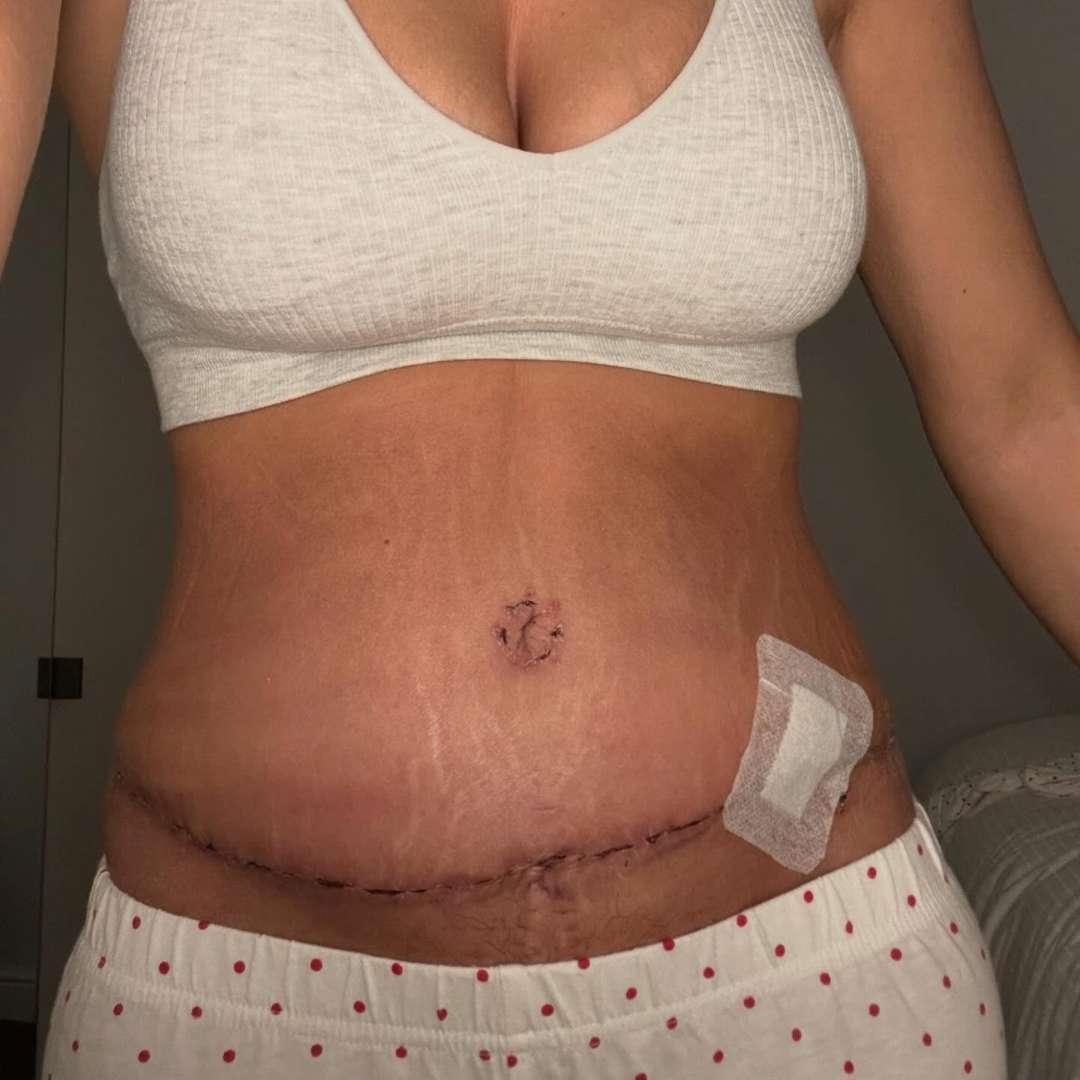
What it looks like: Your scar will look like a thin line that's pink or red, and may have small scabs or dried blood along it. Bruising and swelling around the area are common.

What's normal: Tightness, numbness and some tenderness, especially when you stand up straight. You may notice the scar feels slightly firm to the touch.

What to watch out for: Redness that spreads away from the scar, skin that feels hot, any discharge or unpleasant smell, or the wound starting to open. Contact us straight away if you notice any of these.

Around 4 weeks

What it looks like: Your scar should now be fully closed and will usually look pink or red, and may be slightly raised.

What's normal: Itching is very common at this stage and is a sign your skin is healing. Your scar may also feel tight, particularly when you move or stretch. Once your surgeon or nurse confirms your incision has fully closed, you can usually start your scar care routine, such as silicone gel or sheets.

What to watch out for: Small open areas, which are most common in the centre of the scar or around your belly button, a stitch poking through the skin, or a soft, fluid-filled swelling above your scar. These can usually be managed easily, so let our team know so we can check them.

Around 2 to 3 months

What it looks like: Don't be surprised if your scar looks redder, firmer or more raised than it did a few weeks ago. This is a normal part of healing, as your body is busy producing new collagen to strengthen the area.

What's normal: Some firmness, itching and a darker colour. In darker skin tones, scars may look darker brown rather than red or pink. Numbness above the scar often starts to improve gradually.

What to watch out for: A scar that becomes very thick, raised and itchy, or starts to spread beyond the edges of the original incision. These can be signs of a raised (hypertrophic) or keloid scar, and early treatment can help, so it's worth getting it checked.

Around 6 months

What it looks like: Your scar will usually start to soften and flatten, and its colour will begin to fade.

What's normal: The scar may still look pink or slightly darker than your surrounding skin. Some people still notice a little numbness or tightness, which continues to improve over time.

What to watch out for: A scar that is still very raised, thick or uncomfortable. If you're unhappy with how your scar is healing, speak to our team about scar treatment options.

After 1 year

What it looks like: Most scars are much paler, flatter and softer by now, often settling into a thin line that sits low enough to be covered by most underwear and swimwear.

What's normal: Your scar will continue to improve gradually, and it can take up to five years to fully mature. It won't disappear completely, but it usually becomes far less noticeable.

What to watch out for: Scars can darken if exposed to the sun, so keep protecting yours with clothing or a high-SPF sunscreen. If your scar is still raised, red or bothering you, treatments such as laser therapy or steroid injections may help.

How to Manage Tummy Tuck Scars

Managing Tummy Tuck scars is crucial for reducing their visibility over time. Your surgeon will provide detailed aftercare instructions, which may include:

  • Scar creams and silicone gel sheets: These can help soften and flatten the scar tissue, making it less noticeable.

  • Avoiding sun exposure: UV rays can darken scars, making them more visible, so it’s important to keep your scar covered or apply high-SPF sunscreen.

  • Maintaining proper wound care: Following your surgeon’s instructions on cleaning and dressing the wound is essential for preventing infections that can worsen scarring.


Additionally, some patients may explore laser treatments or other non-invasive procedures to improve the appearance of scars if they remain prominent after the healing process. Pall Mall’s team will provide all necessary guidance to ensure your scars heal as smoothly as possible.

Worried About Post-Surgical Scar Appearance?

It's completely natural to have concerns about scarring when you're considering a tummy tuck. Your aftercare at Pall Mall includes nurse check-ins and complimentary products such as Solution for Scars cream to support your healing. If you'd like to improve the appearance of your scar once it has healed, our consultant dermatologists also offer scar treatments, including:

Laser Therapy

Laser therapy is a treatment offered by Pall Mall Medical's consultant dermatologists that may help improve the colour, texture and overall appearance of tummy tuck scars.

The laser uses focused light energy to target the redness in scar tissue, which can help reduce persistent redness and discolouration. It may also encourage collagen remodelling, which can help improve uneven skin texture along the incision line. Treatment is carried out in short in-clinic sessions, and the number of sessions needed and results vary from person to person. Your dermatologist will talk you through what's realistic for your scar at your consultation.

Steroid Injections

Steroid injections are a treatment offered by Pall Mall Medical's consultant dermatologists that may help flatten and soften thick or raised (hypertrophic) tummy tuck scars, and ease any tightness or discomfort.

The steroid is injected directly into the scar tissue along your incision line. This can help reduce inflammation and break down excess collagen, so over a series of short in-clinic sessions, your scar may become flatter, softer and less itchy.

Everyone's skin responds differently, so your dermatologist will assess your scar first, explain what you can realistically expect and talk you through any side effects, so you can decide whether it's the right option for you.

Cryotherapy

Cryotherapy is a treatment offered by Pall Mall Medical's consultant dermatologists that may help flatten and soften thick or raised (hypertrophic) scars after a tummy tuck.

During treatment, very cold temperatures are carefully applied to the scar tissue using liquid nitrogen. This can help break down excess collagen in the scar, so it may gradually become flatter and softer as it heals. Treatment is quick and carried out in clinic, and it's sometimes combined with steroid injections for raised scars.

Everyone's skin responds differently, so your dermatologist will assess your scar first, explain what you can realistically expect and talk you through any side effects, so you can decide whether it's the right option for you.

Ampika Pickston after her tummy tuck

Patient Experiences

Hearing from people who've been through it can help you know what to expect. Real Housewives of Cheshire star Ampika Pickston shares her experience of having a reverse tummy tuck at Pall Mall, including how she looked after her scar during recovery.

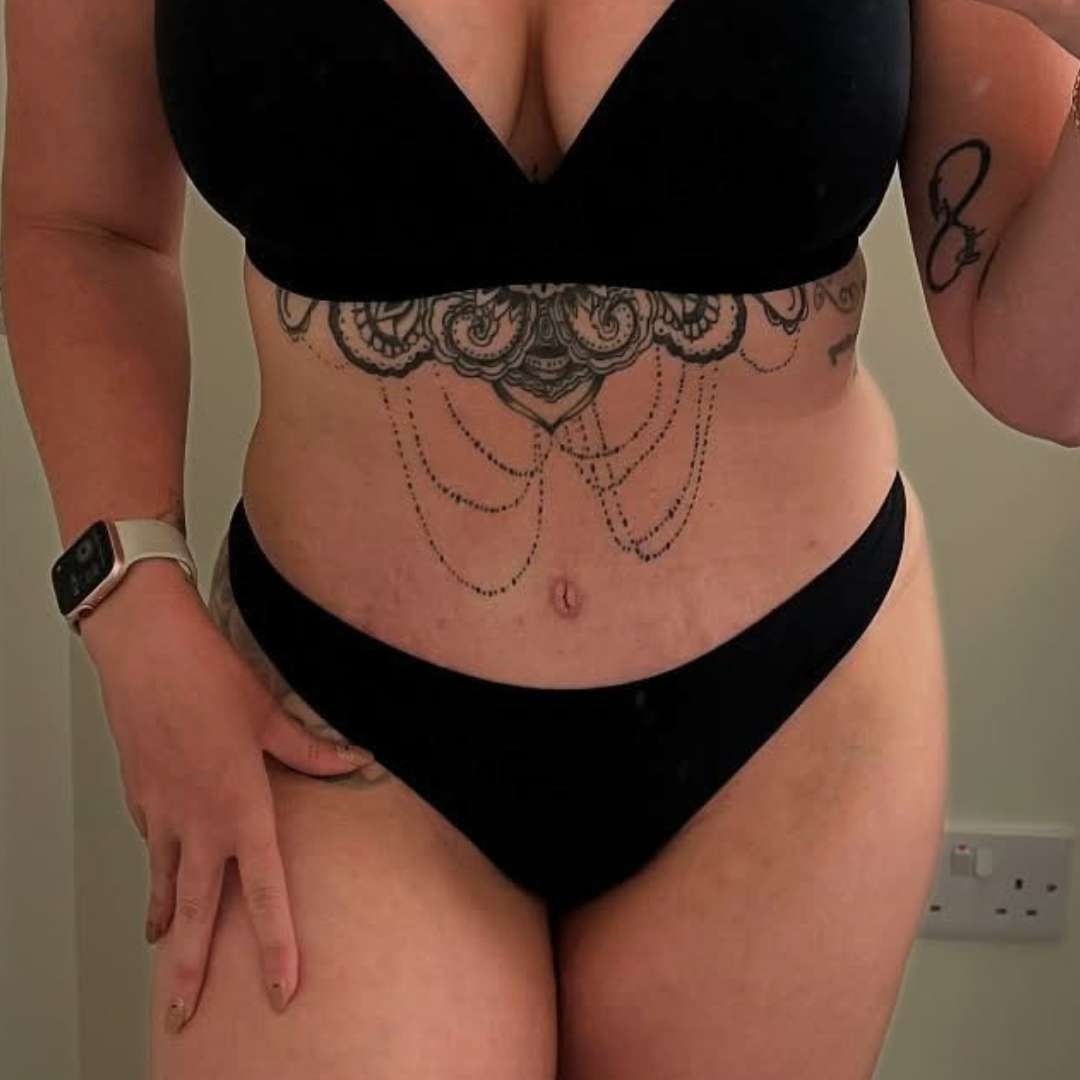
Fellow Real Housewives of Cheshire star Tanya Bardsley also talks about her tummy tuck journey and how her scar has changed as it healed. You can read more patient stories to hear about other people's experiences, and why following your aftercare advice is such an important part of your recovery.

Pall Mall Cosmetics Facebook community group

Join our private community

Connect with other Pall Mall patients, hear first-hand experiences from people who have had surgery, and get honest, real-life advice. Whether you have questions, are looking for support, or simply want to hear what the journey is really like from those who have been through it, our community is a space to connect, share experiences, and learn from others.

"Recovery really is a rollercoaster. When you read 'trust the process' you really do have to go with the flow. This community group really does help you before and after surgery. Women supporting women."

Proud to deliver 5-star care to patients every year.

This is why our patients rate us Excellent on Trustpilot.

Frequently Asked Questions.

Where will the scars be located?

Tummy Tuck scars are usually located along the lower abdomen, just above the pubic area, and can be hidden under most underwear or swimwear.
Will the scars disappear eventually?

Tummy Tuck scars will not completely disappear but will fade significantly over time, becoming less noticeable after several months to a few years.

Is it possible to revise or improve the appearance of Tummy Tuck scars later on?

Yes, scar revision procedures or treatments like laser therapy can improve the appearance of Tummy Tuck scars if they remain prominent after healing.

Can Tummy Tuck scars be minimised?

Yes, following post-operative care instructions, using scar creams or silicone sheets, and avoiding sun exposure can help minimise Tummy Tuck scars. 

Discuss your options with our team

A member of our team will be in touch with you to discuss your requirements. 

I agree to receive advice, offers and news by email and SMS in accordance with our privacy policy

Tummy Tuck Insight & Patient Stories

I was a master of disguise: June’s Tummy Tuck Journey
For almost four decades, June lived with something that had a significant impact on how she felt about her body - excess skin and tissue around her abdomen that she describes as an “apron belly”.
Pall Mall Fallback Image
Kersti Cawtherley - Mini Tummy Tuck at Pall Mall

Explore Kersti Cawtherley's transformative journey with Mr Ben Klass at Pall Mall as she opts for a Mini Tummy Tuck to reclaim her confidence after pregnancy.

Pall Mall Fallback Image
Mr Bechar explains modern tummy tuck surgery

Mr Bechar explains the new, innovative lock and glue tummy tuck technique to help patients achieve natural looking results with enhanced recovery and reduced reliance on traditional surgical drains.

Pall Mall Fallback Image
What happens to your belly button during a Tummy Tuck?

Learn what happens to the belly button during a Tummy Tuck, and see what the results look like. Book a free consultation to find out more about the procedure.